

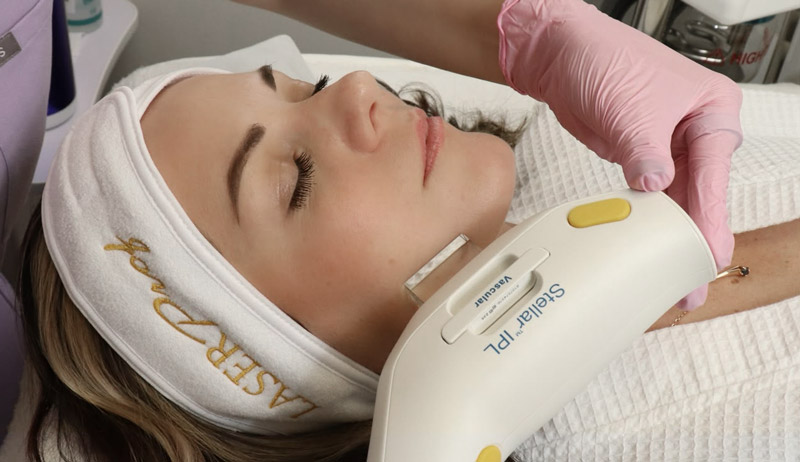
Sun spots, redness, broken capillaries, and uneven skin tone can make your complexion look tired and older than you feel. Makeup can hide them for a day, but it doesn’t remove them. An IPL Photofacial targets these concerns at their source, so your skin can look clearer, brighter, and more even, without surgery or long recovery. At LaserProf in Feasterville – Trevose, Philadelphia, we perform IPL treatments with the advanced Lumenis M22 system.
What Is an IPL Photofacial?
An IPL (Intense Pulsed Light) Photofacial is a non-invasive light-based treatment that improves discoloration and redness in the skin. Unlike a laser, which uses a single wavelength, IPL delivers a broad spectrum of light. The light energy is selectively absorbed by excess pigment and small superficial blood vessels.
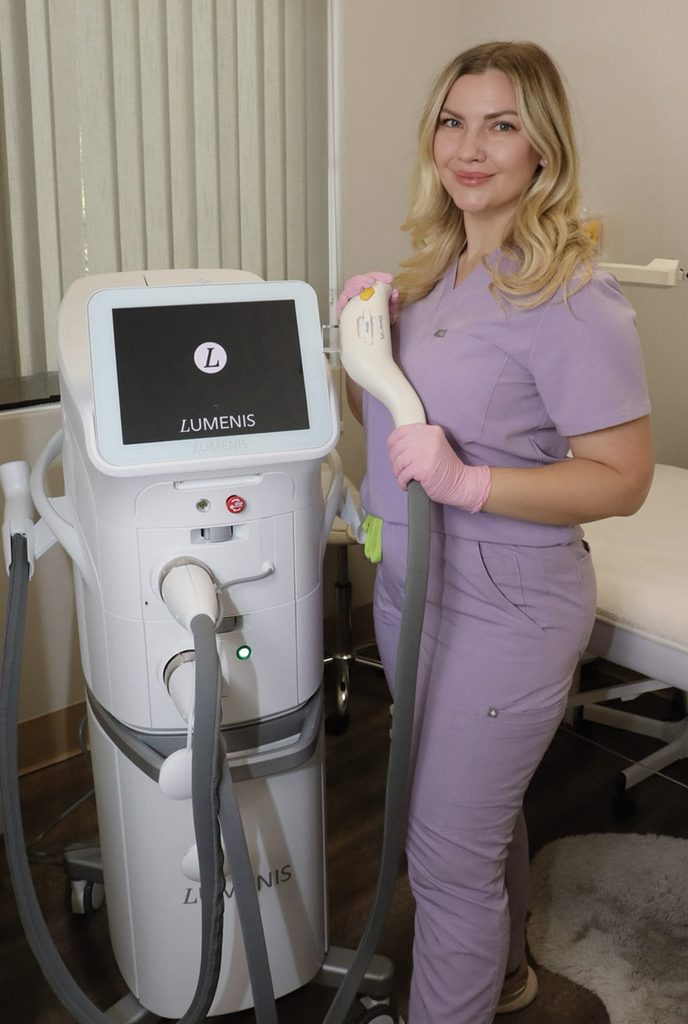
It gradually breaks them down, and the body naturally clears them away. At LaserProf, we use the Lumenis M22, one of the most trusted IPL platforms in aesthetic medicine. Its filters and settings let our specialists adjust each treatment to your skin type and your specific concerns.
Prices IPL
(hyperpigmentation, acne, rejuvenation)
| Area | Price |
|---|---|
| Face | $ 259 |
| Neck | $ 119 |
| Decollete | $ 159 |
| Combination treatments | Price |
|---|---|
| Face + Neck | $ 389 |
| Face + Neck + Decollete | $ 499 |
| Area | Price |
|---|---|
| Face (x3) | $ 669 |
| Face + Neck (x3) | $ 990 |
| Face + Neck + Decollete (x3) | $ 1199 |
Special Introductory Deal
Get 50% OFF your first Lumenis M22 IPL session.
Discount applied automatically at checkout or during your consultation.
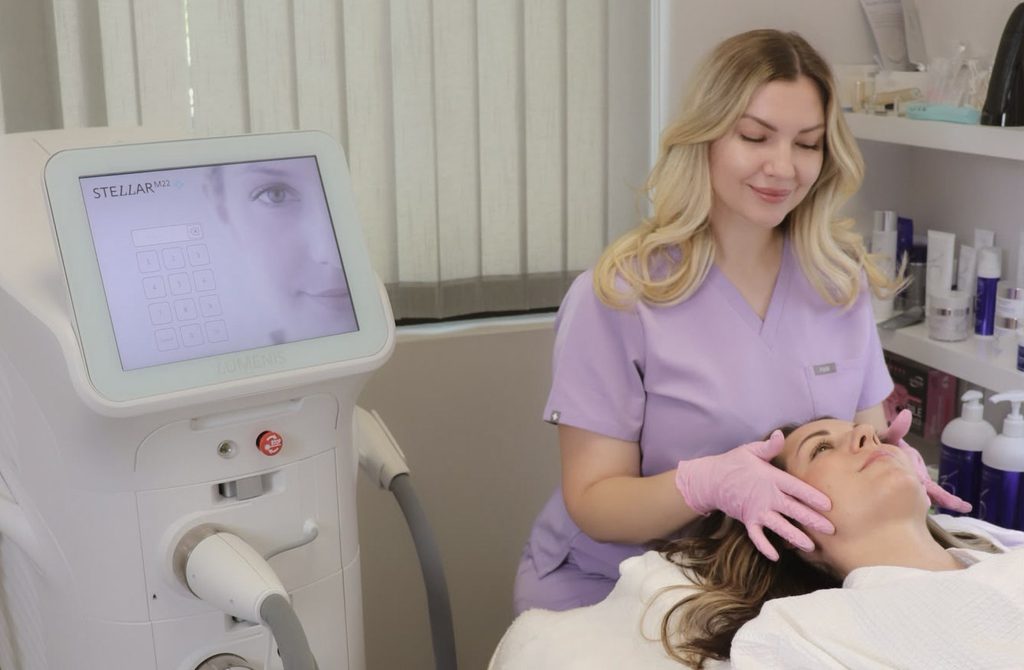
What Skin Concerns Can IPL Treat?
An IPL Photofacial can help with a range of common skin issues:
- Sun damage. Years of UV exposure leave brown patches and a blotchy tone. IPL helps fade this discoloration.
- Age spots and freckles. Dark spots on the face, hands, and chest become lighter with each session.
- Redness and flushing. IPL can reduce diffuse redness and help calm the look of rosacea-prone skin.
- Visible capillaries. Small broken blood vessels on the nose and cheeks become less noticeable.
- Uneven skin tone and texture. Skin looks smoother, more uniform, and more radiant.
Treatment areas include the face, neck, chest (décolleté), hands, and other sun-exposed areas.
Benefits of IPL Photofacial
- Non-invasive. No needles, no incisions, and no anesthesia.
- Minimal downtime. Most clients return to their normal routine the same day.
- Customized treatment. Settings are tailored to your skin type and goals.
- Treats several concerns at once. Pigmentation and redness can be addressed in the same session.
- Quick sessions. A facial treatment usually takes about 20–30 minutes.
- Gradual, natural-looking results. Your skin improves with each session, with no “done” look.
Who Is a Good Candidate for IPL?
IPL Photofacial works best for people with light to medium skin tones who want to reduce sun damage, age spots, freckles, redness, or visible capillaries. It is a great choice if your skin looks dull or blotchy after years of sun exposure, or if makeup no longer hides uneven tone the way it used to. Many clients choose IPL because they want a brighter, clearer complexion without the downtime of chemical peels or ablative lasers. Because the treatment can be adjusted to different concerns and areas, it works for the face as well as the neck, chest, and hands, which often show sun damage first.
There are some situations in which IPL may not be the right option. We don’t recommend the treatment during pregnancy or breastfeeding, or when the skin is tanned, sunburned, or covered with self-tanner. IPL is also not suitable for people taking photosensitizing medications or who have used isotretinoin (Accutane) within the last six months. Very dark skin tones, active skin infections, open wounds, or a history of keloid scarring in the treatment area may also rule it out. During your consultation at LaserProf in Feasterville – Trevose, our specialist will assess your skin and confirm whether IPL is the right choice for you.
What to Expect During the Treatment
- Consultation. We evaluate your skin, discuss your goals, and plan the right settings.
- Preparation. The skin is cleansed, a cooling gel is applied, and you wear protective eyewear.
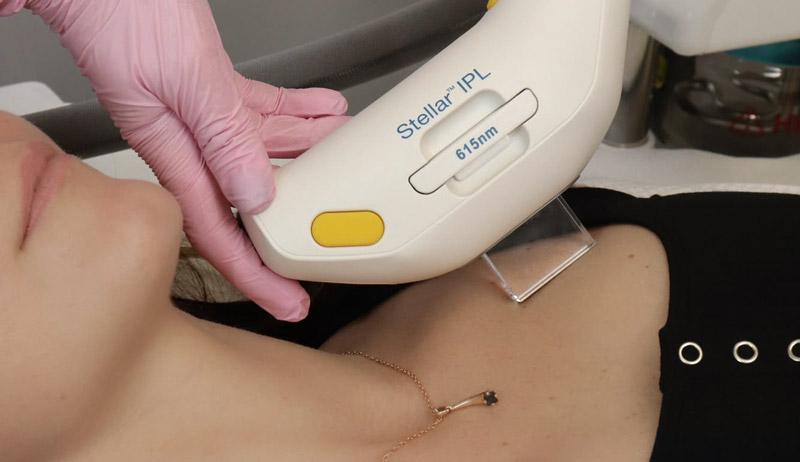
- Treatment. The specialist glides the IPL handpiece over the skin and delivers pulses of light. Most clients describe it as a light snap, similar to a rubber band, with a warm sensation.
- After the session. The gel is removed and SPF is applied. You can go home or back to work right away.
Results and Recommended Number of Sessions
Many clients notice a brighter complexion after the first treatment. For the best, longer-lasting results, we recommend a series of 3–4 treatments spaced 3–4 weeks apart. Each session builds on the previous one, and your skin becomes smoother, clearer, and more even-toned.
To keep your results, we recommend one maintenance session once or twice a year, along with daily sun protection.
IPL Aftercare
Mild redness and a feeling similar to a light sunburn are normal for a few hours after treatment. Brown spots may temporarily darken and look like “coffee grounds.” They naturally flake off within 7–10 days. This is a sign the treatment is working.
For best results after your IPL Photofacial:
- use broad-spectrum SPF 30+ every day;
- avoid direct sun exposure and tanning for at least 2 weeks;
- skip hot tubs, saunas, and intense workouts for 24–48 hours;
- don’t pick or scrub darkened spots, and let them flake off on their own;
- pause retinoids and exfoliating acids for a few days.
FAQ
Most clients tolerate it very well. You may feel a quick snapping sensation and warmth with each pulse. The cooling gel helps keep the treatment comfortable.
No. A laser uses one focused wavelength, while IPL uses a broad spectrum of light filtered for specific concerns. This lets IPL treat pigmentation and redness in the same session.
Treated spots and capillaries are reduced long-term. However, new sun damage can appear over time, so daily SPF and occasional maintenance sessions help keep your skin clear.
Yes. IPL works well alongside treatments like HydraFacial or Microneedling. Your specialist will recommend the right combination and timing.
Fall and winter are ideal because sun exposure is lower, but with proper sun protection you can have IPL any time of the year.
